- Can it break my directory?
- Not by accident. New profiles are read-only until you change that, browsing writes nothing, and every change is shown exactly as it will be sent before anything leaves. It will still let you delete an OU on purpose. It just makes sure it is on purpose.
- Which servers does it work with?
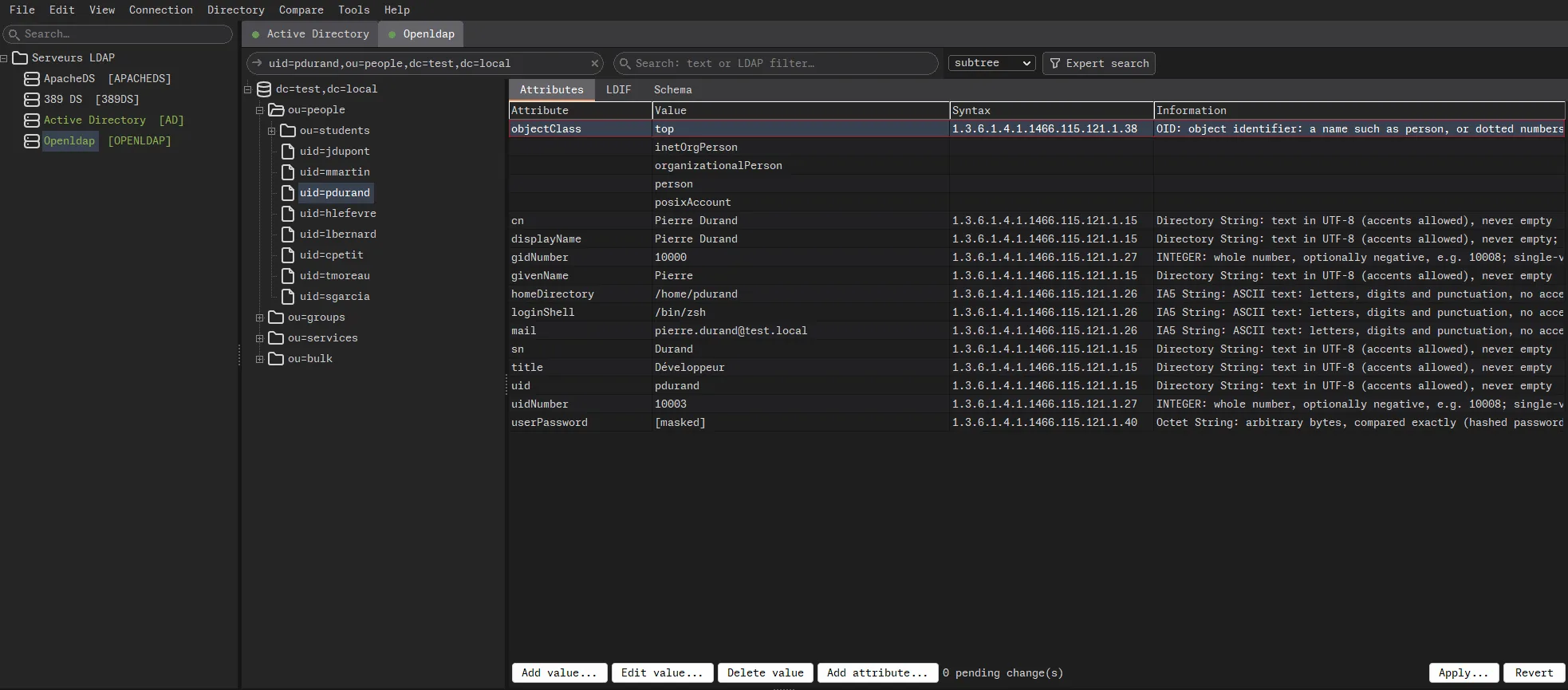
- It is tested against OpenLDAP, 389 Directory Server, ApacheDS and Active Directory. An LDIF file can also be opened as if it were a server, with its own tree, search and editing.
- Where are my connection passwords stored?
- Nowhere, unless you ask. Those you choose to remember go into a single encrypted document on your disk, with your profiles, folders and saved searches, behind a master password that is deliberately slow to guess. There is no account and no sync service.
- Can it recover a user's password?
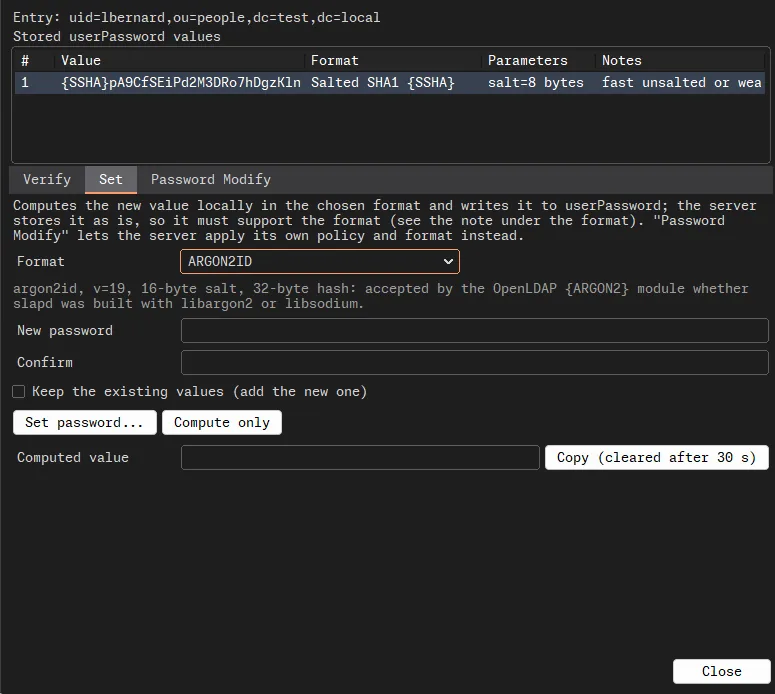
- No. A stored password is a hash, and there is nothing to decrypt. Rottentree reads the format, checks a candidate password against it, tells you whether the format is weak, and generates new values. Recovery is not a feature, it is a different job.
- What happens if the connection drops in the middle of a change?
- Rottentree says the outcome is unknown, because it is. It never replays the change on its own, since replaying a delete is a fine way to find out whether the first one worked. Read the entry again and decide.
- Will Windows or macOS complain when I install it?
- Yes. Nobody has paid a certificate authority to vouch for it, so Windows calls the publisher unknown and macOS blocks the first launch. Both warnings are accurate, and neither is a verdict on the software.