- Is it actually rotten?
- The name, enthusiastically. The rest, no. Your file survives a power cut mid-save. A half-finished download never replaces a good one. The program notices when a server stops being the server it was yesterday. The rot is stored entirely in the branding, in a sealed container, at room temperature, where it cannot reach anything important.
- Is this just a list of saved connections?
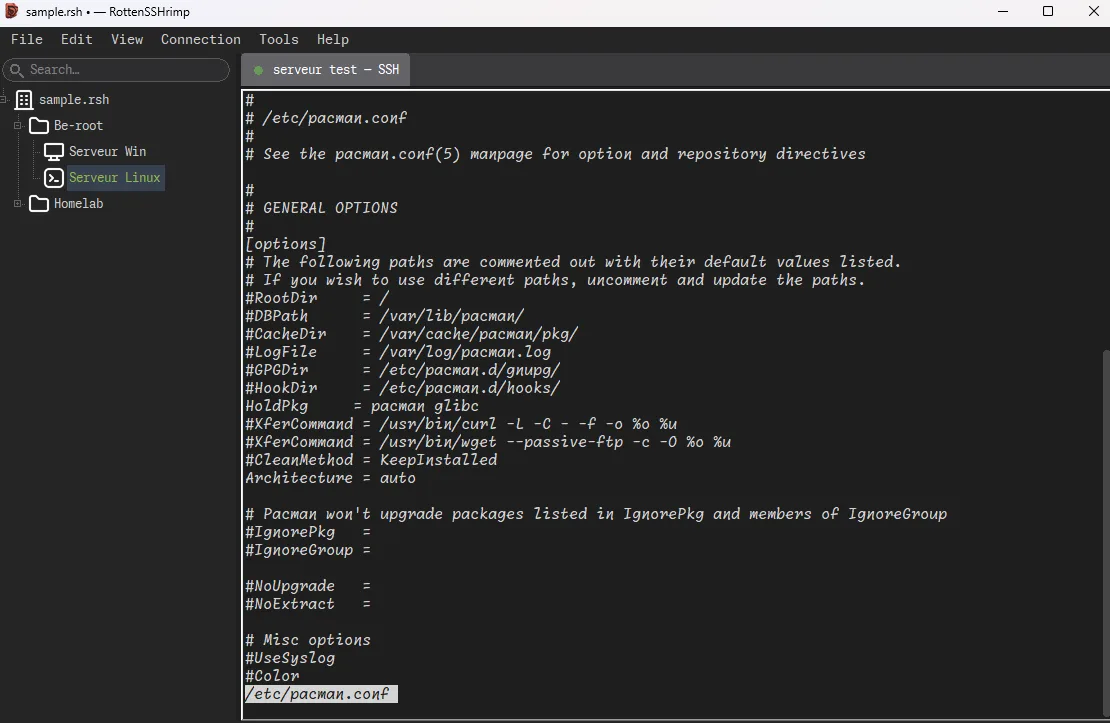
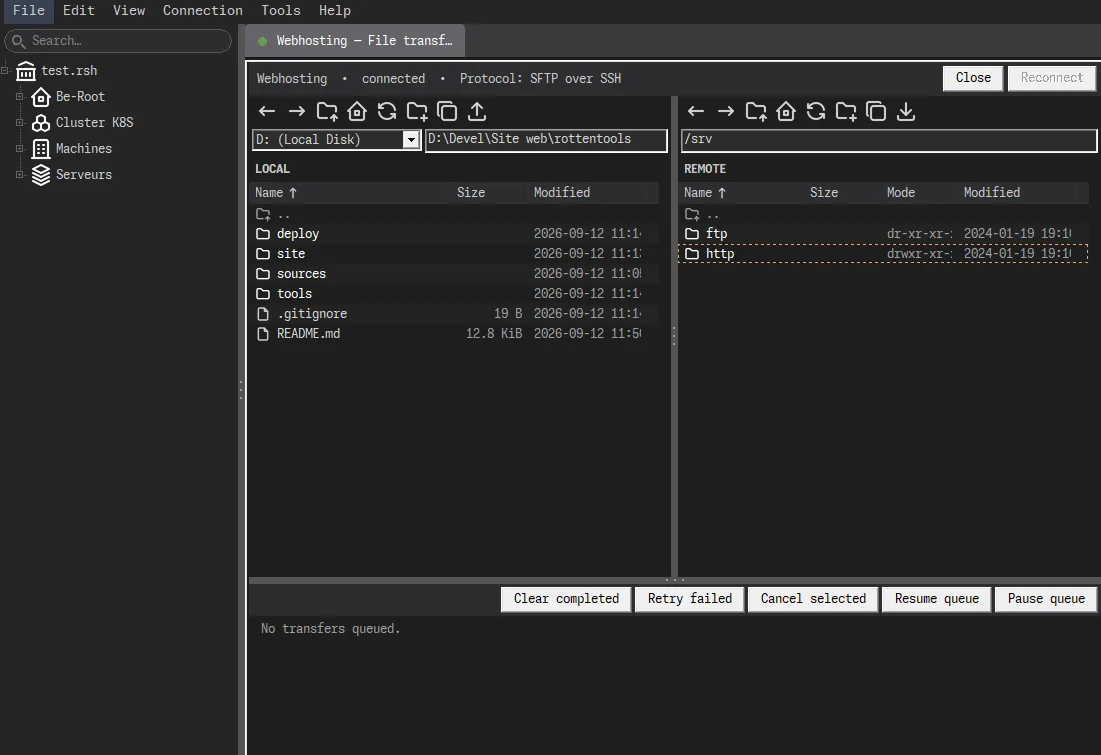
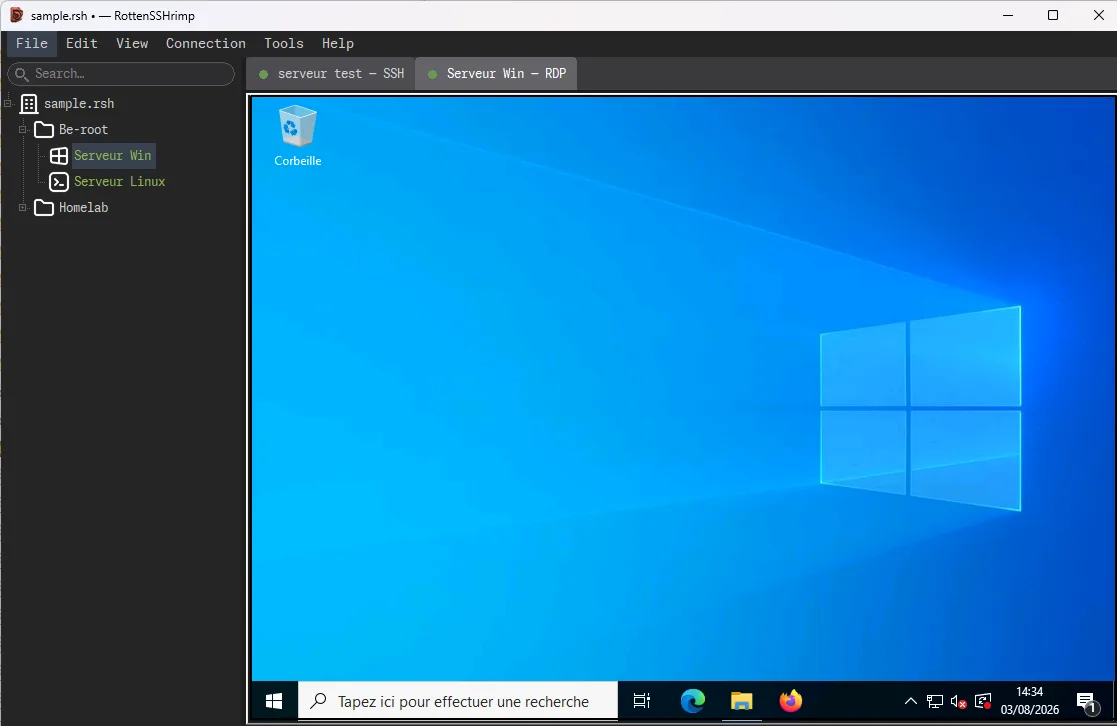
- No. Terminals, remote desktops, file transfer and tunnels share one window. Any machine can act as a stepping stone to the ones hidden behind it. Containers and Kubernetes pods open as tabs like anything else, and everything sits in a single encrypted file.
- Where are my passwords and keys stored?
- In one encrypted file on your disk, locked with a master password that is deliberately slow to guess. There is no account and no sync service. Keys are never written to disk unencrypted, and a hardware security key stores only a handle, never the secret itself.
- What happens if the connection drops during a file transfer?
- The good file is still there, untouched, and the partial one is kept separately. Reconnect and the queue picks up where it stopped. A complete file is never replaced by half of one.
- Do I need administrator rights for the ping tab?
- No, on any of the three systems. It reports no reply rather than down, because half the healthy machines on earth have been quietly ignoring ping since a security review in 2018.
- Will Windows or macOS complain when I install it?
- Yes. Nobody has paid a certificate authority to vouch for it, so Windows calls the publisher unknown and macOS blocks the first launch. Both warnings are accurate, and neither is a verdict on the software.